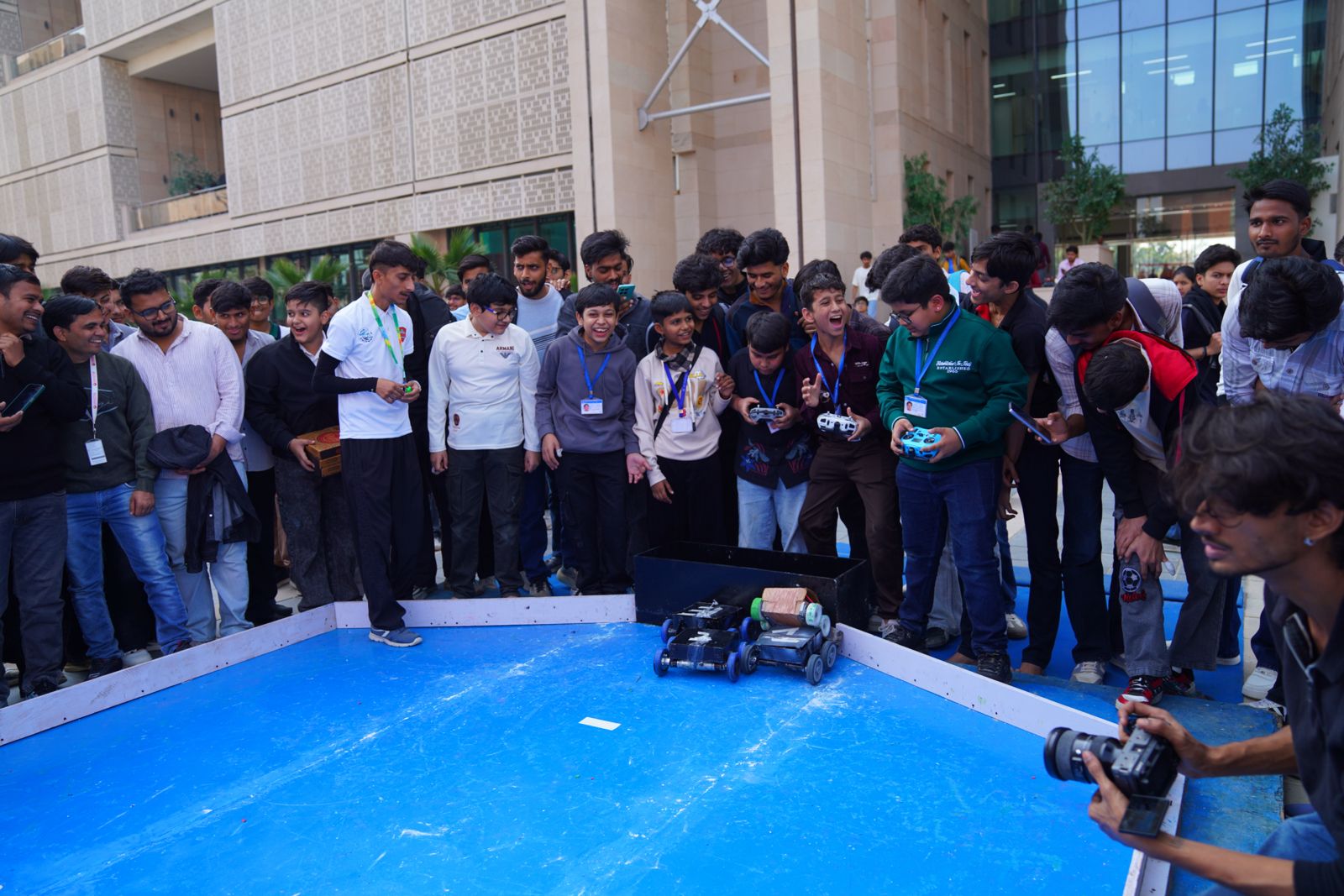
Greater Noida, 23rd November 2026: Galgotias University is hosting the National Robotics Championship 2026, a two-day showcase in which student teams from across India compete with robots and drones they designed and built themselves, in SumoBot, Maze Solver, RoboRace and FPV Drone challenges. Final rounds are under way on campus. The championship has been organised in collaboration with the All India Council for Robotics & Automation (AICRA) and the World Robotics & Automation Organization (WORSO) as part of TechnoXian's World Robotics Championship 10.0.
Professor Hari Babu Srivastava, VIF Distinguished Fellow and former Director General of the Defence Research and Development Organisation (DRDO), inaugurated the two-day championship.
Independent rules, independent judging
AICRA, a national council that promotes robotics, automation and artificial intelligence, founded the TechnoXian championship series. WORSO sets its competition standards. Every machine is built and operated by the competing teams and scored by the organisers against these standards. The championship builds on the Memorandum of Understanding between Galgotias University and AICRA.
Deep tech, built by hand
Robotics, autonomous systems and drones now shape how countries build, defend and move goods. India is building this capability through indigenous research and a growing base of young engineers. Competitions such as this one test that work in real conditions, in full public view.
Each challenge tests a distinct skill. SumoBot tests mechanical design and control under physical contact. Maze Solver tests algorithms and autonomous navigation. RoboRace tests speed, stability and precision. The FPV Drone challenge tests flight control and real-time decision-making.
Learning under pressure
Teams compete against the clock and against each other, and every design decision shows up in the results. Between rounds, participants repair, rewire and retune their machines, learning quickly from failure and from rival teams.
Addressing students at Galgotias University, Prof. Hari Babu Srivastava, VIF Distinguished Fellow and former Director General, Defence Research and Development Organisation (DRDO), said, “Whenever in doubt, go back to basics. If you are averse to risk, then innovation will not happen. India's excellence is scattered; when we integrate it, we build world-class systems.” He urged students to start with the resources they have, take thoughtful risks, treat failure as part of state-of-the-art work, and build strong teams to turn ideas into innovation. He also advised young engineers to develop systems thinking and to focus on learning over marks.
Echoing that emphasis on building and testing with one's own hands, Dr Dhruv Galgotia, Chief Executive Officer, Galgotias University, said, “Deep tech will decide which countries lead in the coming decades, and India needs engineers who can build advanced systems, not just use them. What matters is what students design, build and test with their own hands. When they put their robots and drones up against the best teams in the country, they learn to solve problems under pressure and keep improving. Galgotias University will keep creating platforms where this spirit of competition turns into innovation and excellence.”