
Bhubaneswar, Aug. 18 (UDN): The Odisha government has intensified measures to ensure safe drinking water and prevent water-borne diseases in flood-affected areas, with hundreds of water sources undergoing disinfection and regular quality checks.
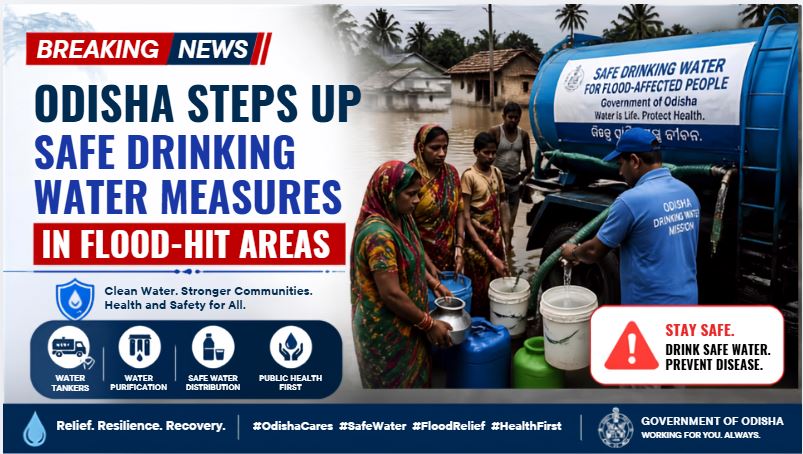
Representational image
As part of the ongoing response, water sources of 1,461 flood-affected tubewells and 89 Piped Water Supply (PWS) projects had been disinfected by 5 pm on August 17, Chief Minister Mohan Charan Majhi said.
The government is also carrying out regular water-quality testing to ensure that drinking water supplied to affected communities remains safe for consumption.
Tankers, Mobile Units Deployed
With normal water supply disrupted in several flood-hit locations, authorities are using multiple arrangements to maintain access to drinking water.
At present, water is being supplied through 27 water tankers, 69 Sintex tank vehicles and six mobile water-treatment units.
In areas experiencing power outages, officials are operating PWS projects using diesel generator (DG) sets to prevent interruptions in water supply.
The administration is monitoring the situation through dedicated control rooms, with officials instructed to respond promptly to emerging drinking-water and sanitation concerns.
Health Services Expanded in Flood Areas
Alongside water-safety measures, the government has stepped up healthcare services in affected communities and relief camps.
Officials are providing medical consultations, medicines and health check-ups, with particular attention being given to vulnerable groups, including pregnant women, children, elderly people and those who are ill.
The focus is on early detection and prevention of water-borne and other post-flood diseases, which can become a major public health concern when drinking-water sources are contaminated.
Public Health Remains Key Focus
With several areas still affected by flooding and waterlogging, authorities are maintaining close surveillance of drinking-water sources and essential services.
The government has stressed that ensuring access to clean drinking water, timely medical care and preventive health measures will remain a priority until normal conditions are restored across the affected areas.
Leave a Reply