
Bhubaneswar, June 18 (UDN): In a major push to strengthen digital connectivity in remote and underserved regions, the Odisha government has directed district administrations to expedite land allocation for the installation of 707 new 4G mobile towers across the state.
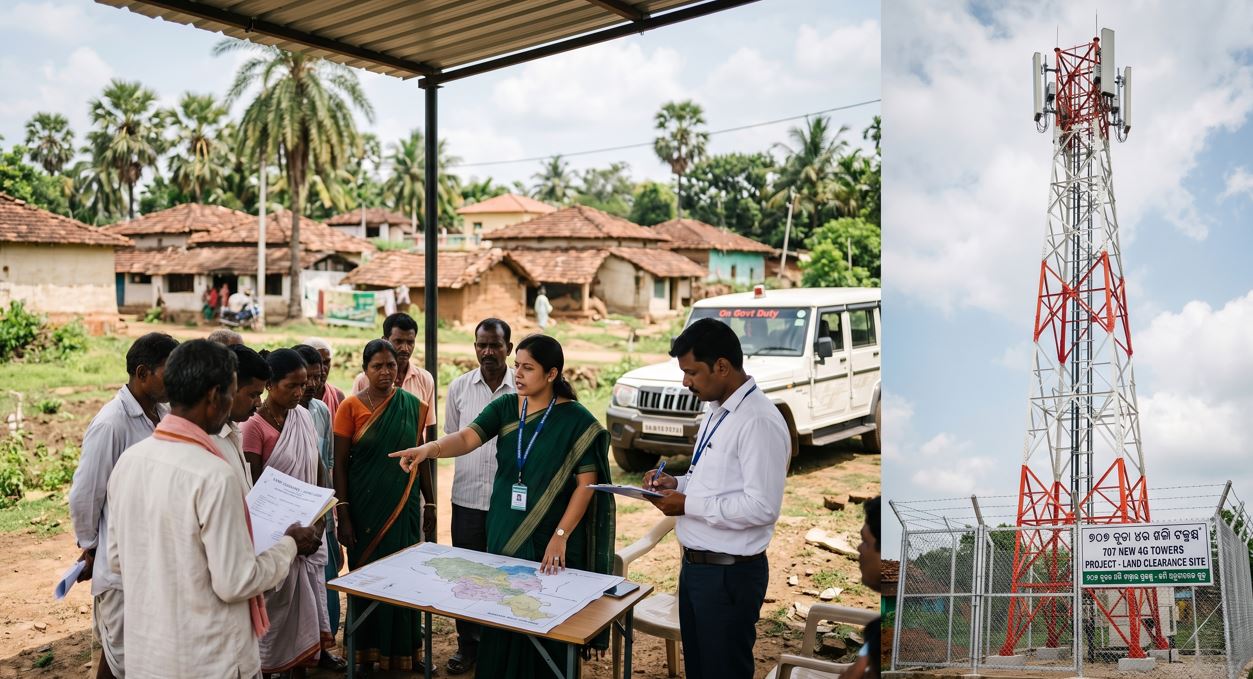
Representational image
The initiative is being implemented under the Digital Bharat Nidhi (DBN)-funded 4G Saturation Project by Bharat Sanchar Nigam Limited, aimed at expanding reliable mobile and internet services in areas with limited or no connectivity.
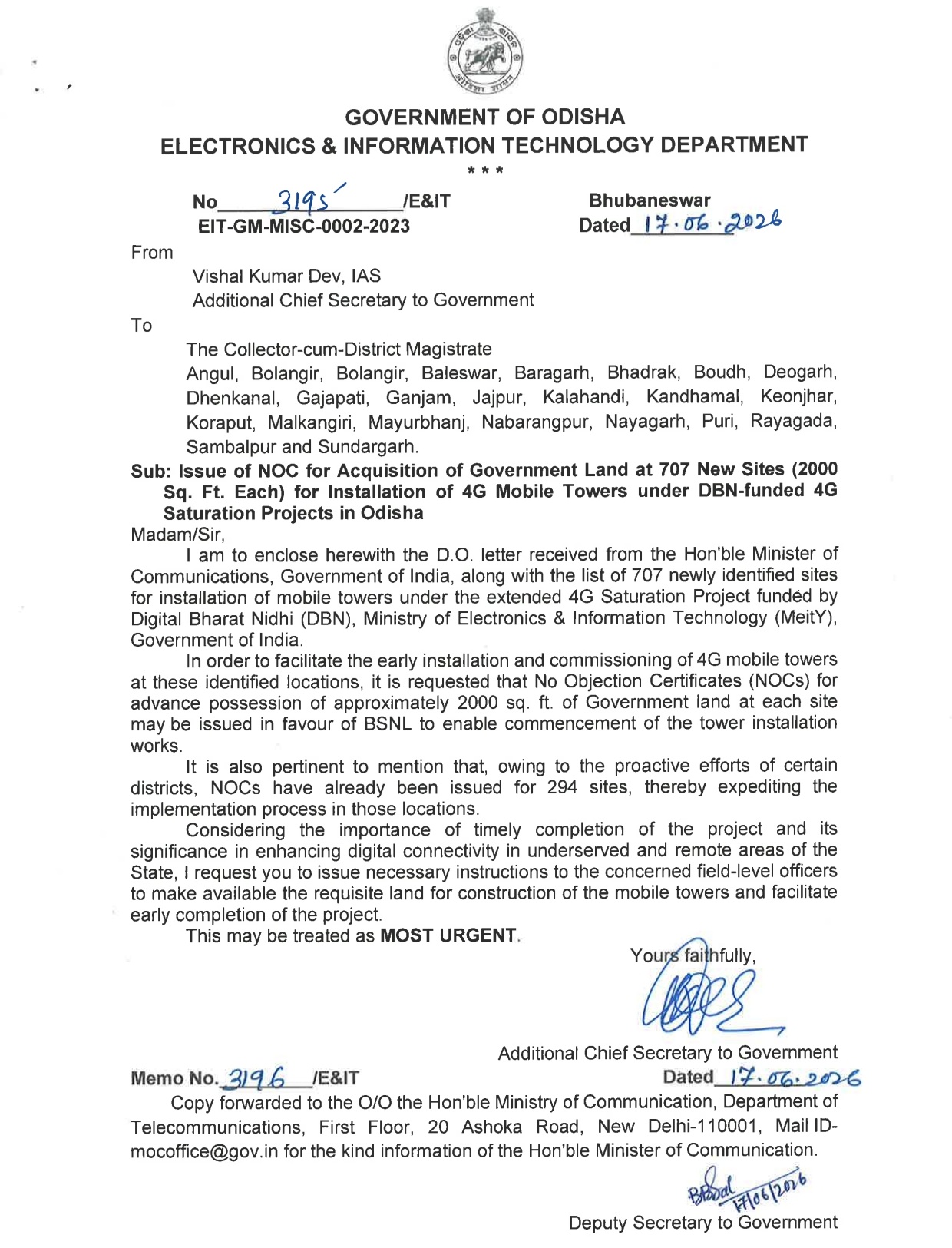
The state’s Electronics and Information Technology Department has instructed Collectors in 24 districts to issue No Objection Certificates (NOCs) and facilitate advance possession of approximately 2,000 sq. ft. of government land at each identified site to enable timely tower installation.
Additional Chief Secretary Vishal Kumar Dev has emphasized the urgency of the project, noting that swift land clearance is essential for the effective rollout of telecom infrastructure in difficult and remote terrains. Officials also highlighted that NOCs have already been issued for 294 locations, helping accelerate early-stage work.
The push follows a communication from Union Telecom Minister Jyotiraditya M. Scindia to Chief Minister Mohan Charan Majhi, underlining the need to improve connectivity in regions where private operators often find expansion commercially unviable. He acknowledged Odisha’s cooperation in advancing telecom infrastructure, noting that 3,602 towers have already been commissioned in the state, with work ongoing on several hundred more.
While 894 tower sites have been sanctioned under the 4G Saturation Scheme in Odisha, land clearance for 707 locations is still pending, prompting renewed administrative focus on faster implementation.
The proposed sites are spread across districts including Gajapati, Ganjam, Kandhamal, Koraput, Malkangiri, Rayagada, Nabarangpur, Kalahandi, Keonjhar, Mayurbhanj, Sundargarh, and Sambalpur, among others. Many of these regions are tribal-dominated and geographically challenging, where connectivity gaps remain significant.
Officials said the project is expected to significantly improve access to digital services such as online education, telemedicine, e-governance, digital banking, and emergency communication, while also supporting local economic activity and digital inclusion in remote communities.
Leave a Reply