
From Temple City to Global Urban Hub: How Bhubaneswar is Redefining the Future of Urban India
Pic Credit: Pexel
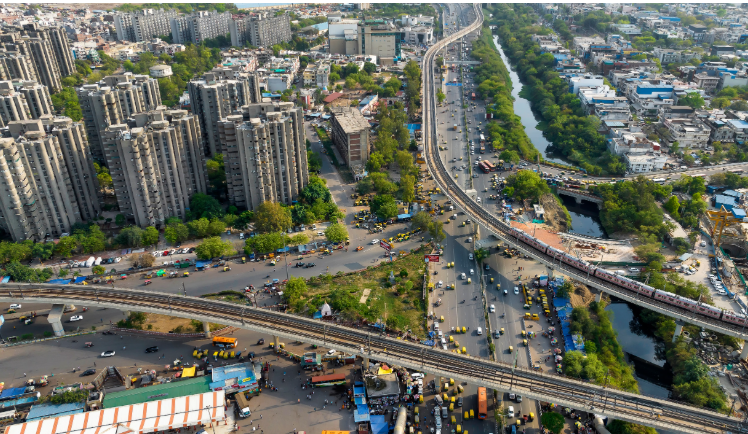
For decades, Bhubaneswar has been known as the “Temple City of India”—a place where heritage, culture, and spirituality defined its identity. Today, however, the Odisha capital stands at the threshold of one of the most ambitious urban transformations in the country. With massive infrastructure investments, metropolitan expansion plans, smart mobility projects, and futuristic urban districts, Bhubaneswar is rapidly evolving into a modern economic powerhouse.
The vision is clear: create a “Greater Bhubaneswar” that can support future generations while positioning the city as a leading destination for technology, innovation, business, and sustainable urban living.
A New Era: The Birth of Greater Bhubaneswar
The Bhubaneswar Development Authority (BDA) has significantly expanded its planning jurisdiction by incorporating 143 new revenue villages. This expansion increases the metropolitan planning area to over 1,349 square kilometers, bringing the total number of revenue villages under the BDA to 712.
The objective is simple yet transformative: prevent unplanned suburban growth and ensure that infrastructure, housing, roads, and civic services expand in a coordinated manner.
As urban populations continue to grow, this move will help Bhubaneswar avoid the chaotic sprawl seen in many rapidly growing Indian cities. Instead, planners are focusing on structured growth corridors supported by modern infrastructure and sustainable land use policies.
The 800-Acre New City: Bhubaneswar’s Future Growth Engine
One of the most exciting developments is the proposed 800-acre “New City” on the western outskirts of Bhubaneswar, covering areas such as Gothapatna, Malipada, and Daspur.
Designed by globally renowned urban planning firm Surbana Jurong of Singapore, the project aims to create a next-generation urban district that combines innovation, business, education, residential communities, and convention facilities.
The New City is expected to feature:
- Innovation and technology zones
- Business and startup ecosystems
- MICE (Meetings, Incentives, Conferences, and Exhibitions) facilities
- Smart residential townships
- Green public spaces
- Sustainable urban infrastructure
Urban experts believe this project could become one of eastern India’s most significant economic hubs over the next two decades.
Solving Traffic Before It Becomes a Crisis
Rapid urbanization often creates severe traffic congestion. Bhubaneswar’s planners are attempting to stay ahead of this challenge through a ₹13,000 crore urban decongestion master plan.
Three-Tier Mobility Revolution
A landmark proposal involves a multi-level transportation corridor connecting Jaydev Vihar to Nandankanan.
The corridor is expected to include:
- Ground-level roads for local traffic
- A six-lane elevated flyover
- A dedicated elevated metro corridor
This integrated approach could dramatically improve traffic flow while preparing the city for future population growth.
Ring Roads to Transform Connectivity
Two major projects are expected to reshape transportation:
Capital Region Ring Road (CRRR):
Designed to divert long-distance and freight traffic away from the city center.
64-Km Inner Ring Road:
Will connect major urban zones and emerging growth corridors, reducing travel times and improving regional connectivity.
Together, these projects could fundamentally change how people move across the capital region.
Smart Roads and Intelligent Traffic Management
Bhubaneswar is also embracing technology-driven urban mobility.
The recently inaugurated 200-foot-wide Ekamra Kanan–Info City corridor has created a direct connection between CRP Square and the city’s IT hub, significantly reducing travel time.
Meanwhile, Bhubaneswar Smart City Limited (BSCL) is modernizing traffic management through:
- 50 adaptive traffic signals
- AI-driven traffic monitoring
- Real-time traffic analytics
- Integration with the Integrated Command and Control Centre (ICOMC)
The goal is to create a city where traffic systems respond dynamically to congestion patterns rather than relying on fixed signal timings.
The Real Estate Boom Begins
Infrastructure development is already fueling a major real estate transformation.
Several emerging corridors have witnessed increased residential demand, particularly in:
- Hanspal
- Sundarpada
- Patia
- Jatni growth corridor
- Chandrasekharpur expansion zone
The BDA has further strengthened housing supply through new residential projects in Chandrasekharpur, Jagasara, and Sanapalla.
As connectivity improves, these areas are likely to become key residential destinations for professionals, students, and entrepreneurs.
A Growing Commercial Skyline
Bhubaneswar’s commercial landscape is evolving rapidly.
Among the most ambitious projects is the proposed 34-storey IT Tower in Satya Nagar. The development reflects growing confidence in the city’s technology and services sector.
The tower is expected to provide:
- Premium office spaces
- Modern business infrastructure
- Startup incubation opportunities
- Public observation decks
Such projects indicate a shift from Bhubaneswar being primarily an administrative capital to becoming a major commercial and technology destination.
Building a Sustainable Future
Urban growth without environmental protection can create long-term challenges. Recognizing this, planners are integrating sustainability into future development.
Waterfront Mission
A ₹500 crore Waterfront Mission aims to rejuvenate urban waterways while improving public spaces and ecological health.
Modern Sewage Infrastructure
A new 60 MLD sewage treatment plant will strengthen sanitation infrastructure and help improve water quality across the city.
Climate-Conscious Planning
The BDA’s Town Planning Schemes under the Samrudha Sahar initiative emphasize:
- Planned road networks
- Drainage systems
- Public utilities
- Green infrastructure
- Climate-resilient urban design
Nearly 969 acres in Patrapada, Bhagabanpur, and Bijipur are being developed under these structured planning frameworks.
Bhubaneswar 2036: What Could the Future Look Like?
If current projects are successfully implemented, Bhubaneswar could emerge as one of India’s most balanced urban success stories by 2036.
The city may evolve into:
- A leading technology and innovation hub
- A major education and research destination
- A smart mobility pioneer
- A sustainable metropolitan region
- An attractive investment destination for global businesses
Most importantly, Bhubaneswar has an opportunity to demonstrate that rapid urbanization does not have to come at the cost of livability, heritage, or environmental sustainability.
Conclusion
The transformation of Bhubaneswar is no longer a future possibility—it is already underway. Roads, smart infrastructure, planned housing, commercial developments, and new urban districts are reshaping the city’s landscape at an unprecedented pace.
The challenge now lies in maintaining the delicate balance between growth and sustainability. If executed effectively, the Greater Bhubaneswar vision could become a national model for urban development and place Odisha’s capital among India’s most dynamic and future-ready cities.
From a historic temple city to a smart global metropolis, Bhubaneswar’s next chapter may well become one of India’s most remarkable urban success stories.
Leave a Reply