
Bhubaneswar, Aug. 1 (UDN): The Odisha State Pollution Control Board (OSPCB) has directed vehicle manufacturers, registered vehicle scrapping facilities (RVSFs) and bulk vehicle owners to register on the Central Pollution Control Board’s (CPCB) Extended Producer Responsibility (EPR) portal within three months to ensure compliance with the Environment (Protection) (End-of-Life Vehicles) Rules, 2025.
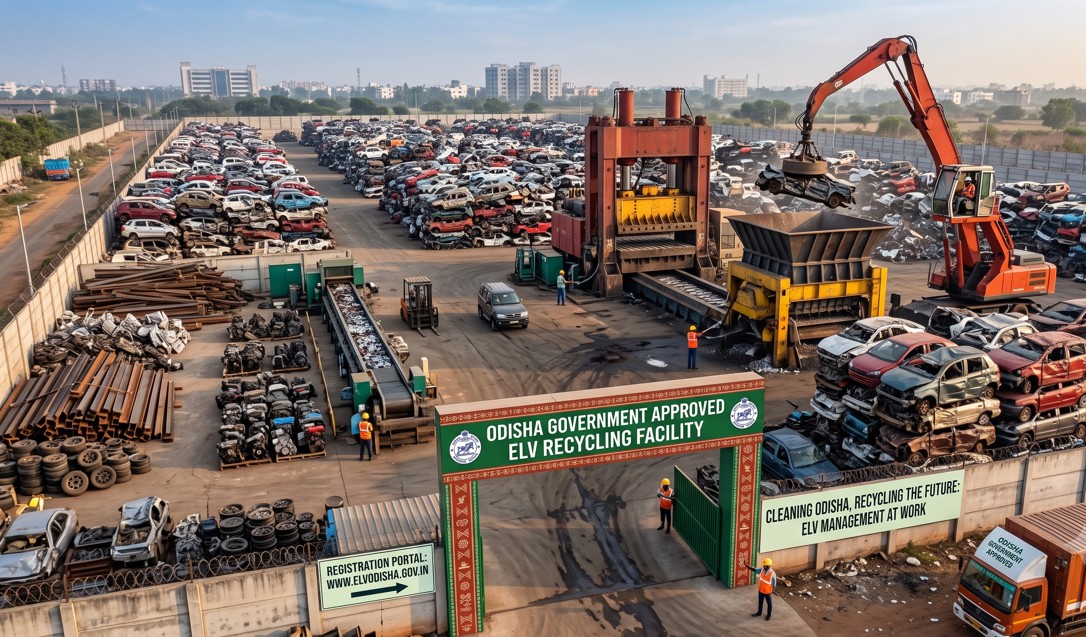
Representational Image
In a recent notification, the Board said registration on the CPCB’s online portal is mandatory for all entities covered under the new rules notified by the Ministry of Environment, Forest and Climate Change (MoEFCC). It has also instructed stakeholders to furnish their registration details to the OSPCB after completing the process.
The Board cautioned that failure to register within the stipulated timeframe or violation of the provisions of the Rules could result in legal action, including the imposition of Environmental Compensation (EC) under the Environment (Protection) Act, 1986.
The new regulatory framework places responsibility on vehicle manufacturers, assemblers, importers and sellers, along with registered scrapping facilities and bulk consumers owning more than 100 vehicles, including state transport undertakings, to ensure the environmentally sound collection, dismantling, recycling and disposal of End-of-Life Vehicles (ELVs).
Under the rules, vehicle owners must present their vehicles for fitness assessment at authorised automated testing stations. Vehicles declared unfit must be disposed of only through registered vehicle scrapping facilities to ensure safe and environmentally compliant recycling.
The OSPCB has also directed collection centres handling ELVs to maintain proper records and transport discarded vehicles exclusively to authorised scrapping facilities using environmentally safe practices.
Bulk consumers have been instructed to deposit End-of-Life Vehicles at designated RVSFs within 180 days of the vehicles being declared unfit. They are also required to complete portal registration through the State Board and submit annual returns as mandated under the Rules.
Meanwhile, automated testing stations have been tasked with uploading details of unfit vehicles to the centralised online portal, while registered scrapping facilities must ensure scientific recycling of vehicles and the safe handling and disposal of hazardous waste generated during the dismantling process.
The move is aimed at streamlining the implementation of India’s End-of-Life Vehicle policy, strengthening environmental compliance, and promoting responsible vehicle recycling across Odisha.
Leave a Reply