
Koraput, Sept. 15 (UDN): In a first-of-its-kind initiative in Odisha, farmers in Koraput are preparing to harvest electricity alongside conventional crops under an agrivoltaic farming model that combines agriculture with solar power generation.
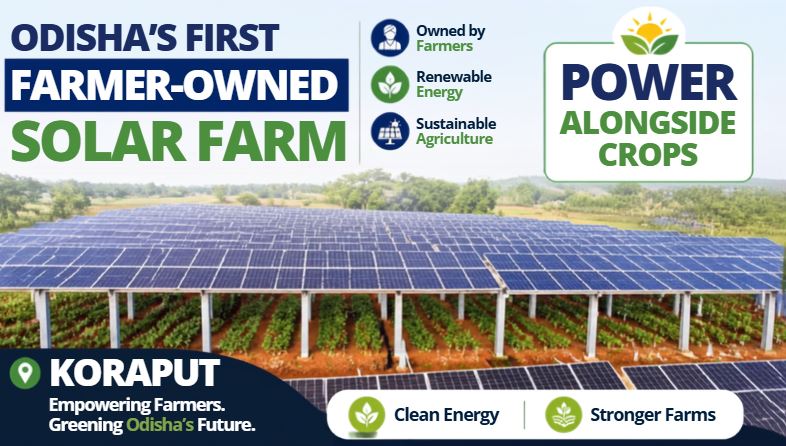
Representational Image
The pilot project has been established at Kulabi panchayat under Nandpur block, where 1,735 solar panels have been installed across farmland. The project is designed to generate around 1 MW of solar power, while allowing cultivation to continue underneath and around the elevated solar panels.
The initiative is expected to create three potential income streams for participating farmers through Kharif crops, Rabi crops and solar power generation.
Crops and solar power from the same land
The agrivoltaic model will allow farmers to cultivate a range of high-value crops while the panels generate renewable energy above the fields.
The proposed crops include ginger, turmeric, potato, onion, ragi, pointed gourd, cucumber, litchi, guava, flowers, strawberry, avocado and kiwi.
The model is aimed at improving land productivity by allowing agricultural and energy generation activities to take place simultaneously rather than competing for separate land resources.
Farmers to own the solar project
What sets the Koraput project apart is its ownership structure. Instead of a private developer leasing farmland and paying rent to landowners, the solar plant will be collectively owned by farmers.
The project is being implemented by Alekh Mahima Farmer Producer Organisation (FPO), which has 513 women members, along with five landowners.
The participating farmers will share revenue generated from both agricultural production and the sale of solar power.
25-year power purchase agreement
A 25-year power purchase agreement has been signed with GRIDCO, providing a long-term framework for selling the electricity generated by the project.
The solar farm is expected to be commissioned in September 2026. The estimated cost of establishing the plant is between Rs 4.5 crore and Rs 5.6 crore.
According to projections, the collective could generate around Rs 50 lakh annually from electricity sales. Over the 25-year agreement period, operating expenses are estimated at around Rs 1.6 crore, with the collective projected to retain roughly Rs 8 crore over the contract period.
A potential model for rural income
The Koraput experiment could offer a new approach to improving farm incomes while expanding renewable energy generation.
If the pilot delivers the expected results, the agrivoltaic model could potentially be replicated in other parts of Odisha, allowing farmers to continue food production while creating an additional, long-term source of income through clean energy.
The project also seeks to demonstrate how agricultural land can support both food production and renewable power generation, potentially creating a more resilient rural economy.
Leave a Reply