
Imagine controlling a computer, operating a robotic arm, or communicating with another person without moving a muscle or speaking a single word. What once seemed like science fiction is gradually becoming a reality through an emerging technology known as Brain-Computer Interfaces (BCIs).
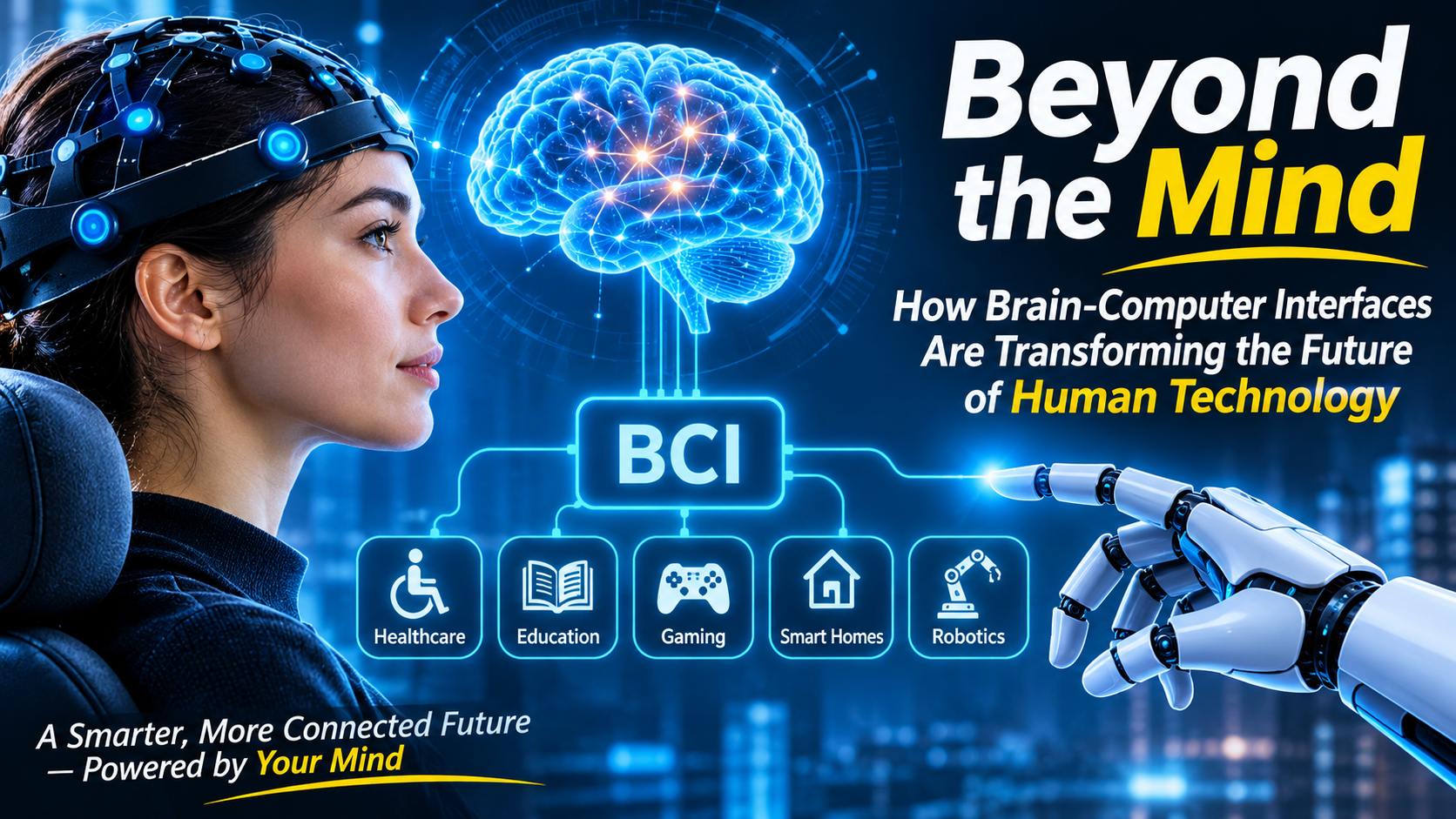
A Brain-Computer Interface creates a direct communication pathway between the human brain and an external device. By detecting and interpreting brain activity, this technology enables people to interact with computers and machines through neural signals rather than traditional physical movements.
As neuroscience, artificial intelligence, and advanced computing continue to evolve, BCIs are opening extraordinary possibilities for healthcare, communication, education, and human-machine interaction. They are not simply changing how humans use technology; they are challenging our understanding of what technology can achieve.
How Does Brain-Computer Interface Technology Work?
The human brain contains billions of neurons that communicate through electrical and chemical signals. Every thought, movement, sensation, and memory involves complex patterns of neural activity.
BCI technology captures these patterns and translates selected signals into commands that a computer or external device can understand.
The process generally involves four stages:
-
Signal Acquisition: Sensors or implanted electrodes detect electrical activity generated by the brain.
-
Signal Processing: Advanced algorithms filter unwanted noise and identify meaningful neural patterns.
-
Signal Interpretation: Machine learning and artificial intelligence help translate detected patterns into recognizable commands.
-
Device Execution: The interpreted commands control an external system, such as a computer cursor, communication software, or robotic limb.
Depending on their design, BCIs may use non-invasive sensors placed outside the head or implanted electrodes that directly interact with neural tissue.
Transforming Healthcare: A New Hope for Patients
One of the most promising applications of BCI technology is in the medical field.
For individuals living with paralysis, spinal cord injuries, or certain neurological conditions, traditional methods of communication and movement can become extremely difficult. BCIs offer an alternative pathway for interacting with the world.
Some important applications include:
-
Restoring Communication: Enabling individuals with severe speech or motor impairments to communicate through computer-generated text or speech.
-
Assistive Mobility: Allowing users to control robotic arms, computer cursors, or other assistive devices using decoded brain signals.
-
Rehabilitation: Supporting research into restoring or improving movement through brain-controlled rehabilitation systems.
-
Neurological Research: Helping scientists understand brain activity and investigate neurological disorders.
These developments represent more than technological progress. They offer new possibilities for independence, accessibility, and improved quality of life.
The Role of Artificial Intelligence in Brain-Computer Interfaces
Artificial intelligence is becoming an important component of modern BCI systems.
The brain produces incredibly complex neural signals, and interpreting them accurately is a significant scientific challenge. AI and machine learning algorithms can identify patterns in these signals, improve decoding accuracy, and adapt to individual users.
The combination of AI and BCI technology could enable more natural communication between humans and machines.
For example, a person may attempt to express a particular word or intention through neural activity. An intelligent decoding system can analyze the relevant patterns and translate them into a digital output.
As these systems improve, the interaction between biological intelligence and artificial intelligence may become increasingly seamless.
Beyond Medicine: Exploring New Possibilities
Although healthcare remains one of the most important areas of BCI development, its potential extends much further.
1. Education and Learning
Researchers are exploring how brain activity could help study attention, cognitive engagement, and learning processes. Such applications may eventually support more personalized learning environments.
2. Gaming and Entertainment
BCIs could introduce new forms of interaction in which users control selected gaming experiences through brain activity rather than conventional controllers.
3. Robotics and Automation
Brain-controlled robotic systems could help individuals interact with machines more directly, particularly in assistive and specialized industrial applications.
4. Human-Computer Interaction
BCIs may create new ways to interact with digital devices, offering alternatives to keyboards, touchscreens, and voice commands.
Challenges and Ethical Concerns
Despite its enormous potential, BCI technology faces significant scientific, technical, and ethical challenges.
-
Privacy of Neural Data: Brain signals may contain sensitive information, making data protection essential.
-
Cybersecurity Risks: Connected neural devices must be protected against unauthorized access and manipulation.
-
Safety and Reliability: Implanted systems require careful medical evaluation, monitoring, and long-term safety assessment.
-
Accessibility and Cost: Advanced BCI systems may remain expensive and difficult to access.
-
Ethical Boundaries: Questions surrounding mental privacy, personal autonomy, informed consent, and human identity require serious consideration.
Technological progress must therefore be accompanied by responsible research, transparent regulation, and strong ethical safeguards.
The Future: Building a New Connection Between Humans and Machines
The future of Brain-Computer Interfaces is not simply about creating machines that can understand human thoughts. It is about developing technologies that can help people overcome physical limitations, communicate more effectively, and interact with the digital world in entirely new ways.
Although many applications remain experimental, ongoing research is steadily expanding the possibilities of direct brain-computer communication.
In the coming years, advances in neuroscience, artificial intelligence, biomedical engineering, and computing may make BCI systems more accurate, accessible, and practical.
However, the ultimate success of this technology will depend not only on what machines can do but also on how safely and responsibly they serve humanity.
Conclusion: The Mind Is the Next Frontier
Brain-Computer Interfaces represent a remarkable intersection of human intelligence and technological innovation. By creating a communication bridge between the brain and machines, they are opening possibilities that were once beyond imagination.
From helping people regain communication abilities to transforming human-computer interaction, BCIs have the potential to redefine the relationship between humans and technology.
Leave a Reply