New Delhi, Feb 09: MSL, Publicis Groupe’s strategic communications and engagement firm, hosted the AI in Advertising and Communications Summit 2026, an official pre-summit to the India AI Impact Summit 2026 marked by the launch of its white paper
“The Chief AI Officer: A Strategic Imperative for Ethical AI Adoption and Regulatory Navigation in India.”
The white paper examines India’s AI readiness and underscores the importance of institutional leadership, clear accountability, and governance frameworks, including the strategic role of a Chief AI Officer, as AI adoption expands across advertising, communications, and digital media. The event brought together government, industry, technology, legal, and communications leaders to examine AI’s growing impact on India’s advertising and media ecosystem and the need for responsible governance.
The white paper features a foreword by Shri Alkesh Kumar Sharma, Member, Public Enterprises Selection Board and Former Secretary, Ministry of Electronics and IT, Government of India, highlighting artificial intelligence as a transformative force reshaping global economies and governance frameworks. It underscores India’s unique position to lead this transition, supported by strong Digital Public Infrastructure, a vibrant technology ecosystem, and a globally recognised talent base, while also acknowledging the ethical, regulatory, and institutional challenges arising from rapid AI adoption.
The whitepaper highlights that even as India’s AI ecosystem expands rapidly, deployment remains uneven across sectors. In advertising and communications, AI adoption for content creation, targeting, analytics, and campaign optimisation is growing quickly, often without sufficient internal oversight.
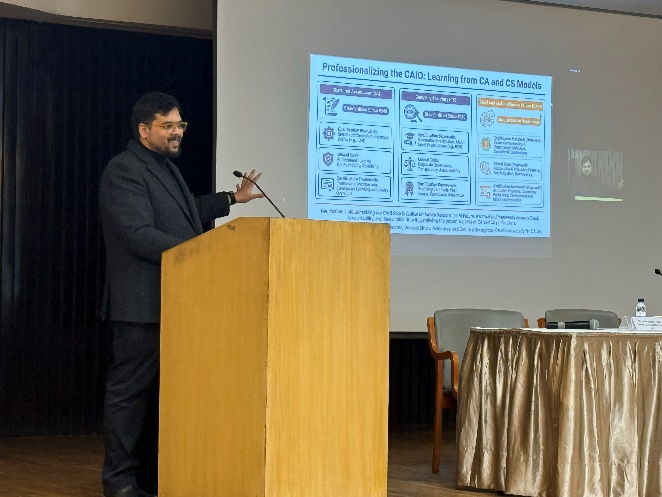
The whitepaper identifies four key gaps: unclear organisational accountability for AI decisions; weak ethical safeguards to address bias, misinformation, and content provenance; regulatory uncertainty amid evolving domestic and global frameworks; and leadership capacity constraints in translating AI innovation into trustworthy outcomes. To address these challenges, it recommends institutionalising the role of a Chief AI Officer (CAIO) as a cross-functional leader overseeing the AI lifecycle, ensuring regulatory alignment, embedding ethical-by-design principles, and serving as a single point of accountability for AI-related risks.
Commenting on the whitepaper, Mr. Arnab Ghosh, Associate Vice President, Public Affairs MSL, said,
“India’s balanced and forward-looking approach to AI prioritises innovation alongside trust, safety, and accountability, and that the whitepaper aligns with the Government of India’s vision by highlighting how a Chief AI Officer can help translate policy intent into responsible AI adoption at scale.”
The white paper positions the Chief AI Officer (CAIO) as a certified, standards-driven role aligned with global AI frameworks, while underscoring the need for risk-based, context-specific AI governance in advertising and mass communications, in line with India’s innovation-friendly approach.