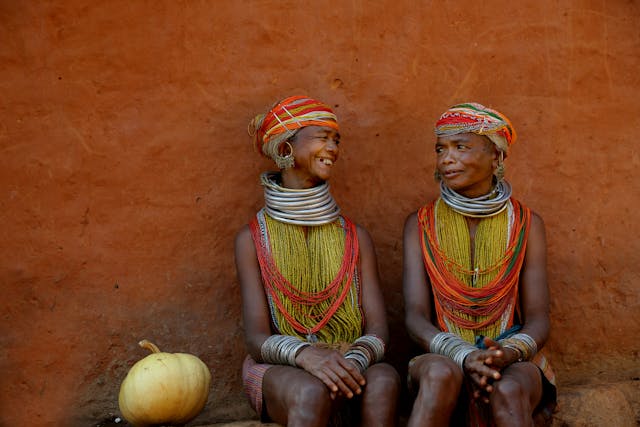
In an age defined by speed, ambition, and digital noise, there still exist places where life moves to the rhythm of nature, community, and tradition. Odisha, on India’s eastern coast, is one such place. Often described as an Anthropologist’s Paradise, the state is home to 62 indigenous tribal communities, each preserving a way of life that has survived centuries of change—largely untouched by modern urban influence.
A journey into Odisha’s tribal heartland is not merely travel; it is an immersion into a living heritage where human relationships matter more than material wealth, where forests are sacred, and where culture is not performed for visitors but lived every day.

Odisha: Where Geography Shapes Culture
Stretching across nearly 150,000 square kilometers, Odisha’s landscape is a tapestry of mountain ranges, forested plateaus, fertile valleys, and coastal plains along the Bay of Bengal. This geographical diversity has played a crucial role in shaping the lifestyles of its tribal communities, many of whom live in remote districts such as Koraput, Rayagada, Kandhamal, and Malkangiri.
With a population of nearly 40 million, Odia (Oriya) is the dominant language, though Hindi and English are limited in rural and tribal regions. This linguistic reality reinforces the importance of traveling with knowledgeable local guides who serve not only as translators but also as cultural bridges.
A Mosaic of Tribes and Traditions
Odisha’s tribes belong to three major linguistic families—Indo-Aryan, Dravidian, and Austric—and each group carries its own worldview, myths, rituals, and social systems. Among the most well-known tribes are the Bonda, Dongria Kondh, Santhal, Munda, Gadaba, Juang, Saora, and Kondh.
What unites them, despite their diversity, is a deep-rooted harmony with nature. Forests are not just sources of food; they are living entities deserving reverence. Hills, rivers, and trees are woven into tribal cosmology, guiding agricultural cycles, festivals, and spiritual beliefs.
Life Beyond the Urban Mindset
In modern society, life is often driven by careers, income, and individual success—frequently at the cost of personal relationships and inner peace. Tribal life in Odisha offers a striking contrast.
Here, happiness is collective, not individual. Daily life revolves around arranging food, tending fields, gathering forest produce, and spending time with family and community members. Wealth is not measured in possessions but in shared meals, festivals, laughter, and mutual support.
Traditional community institutions such as youth dormitories—known as Majang among the Juang and Dhangarabasa among the Bhuyans—play a central role in preserving customs. These spaces serve as centers for education, storytelling, music, dance, and social bonding, ensuring cultural continuity across generations.
Art, Music, and the Language of the Ancestors
Tribal culture in Odisha finds vibrant expression through art, music, dance, and oral traditions. These are not separate from daily life; they are woven into it.
-
Saora paintings, known for their ritualistic and symbolic patterns, depict relationships between humans, spirits, and nature.
-
Santhal wall paintings use earthy tones to narrate stories of hunting, farming, and festivals.
-
Handmade jewelry, metalwork, pottery, and weaving reflect both aesthetic beauty and practical function.
Music and dance accompany every major life event—from sowing seeds to harvest celebrations, from birth rituals to seasonal festivals. Events such as Chait Parab of the Bonda tribe and Kedu festival of the Kondh community are spiritual celebrations that honor ancestors, natural forces, and communal identity.
The Pulse of Tribal Markets
Perhaps the most vivid expression of tribal life can be found in Odisha’s weekly tribal markets. Held in places like Jeypore, Kunduli, Onukudelli, Rayagada, and Koraput, these markets are social, cultural, and economic lifelines.
Operating largely on barter systems, tribal people exchange forest produce, vegetables, grains, handmade tools, textiles, and crafts. The atmosphere is electric—splashes of colorful attire, rhythmic conversations, spontaneous laughter, and the hum of shared humanity.
Markets are also spaces where stories are exchanged, friendships renewed, and traditions reinforced. Access to some markets, especially those involving protected tribal groups, may require permits, and respectful conduct is essential.
Village Encounters: Where Strangers Become Friends
Venturing into tribal and semi-tribal villages is often the most emotionally rewarding experience for travelers. Initial curiosity soon turns into connection—especially with children, whose shy smiles quickly transform into playful companionship.
Language barriers dissolve through gestures, shared meals, and laughter. Visitors are often invited to sit with elders, sip locally brewed drinks, or watch artisans at work. Some villages specialize in pottery, weaving, rice cultivation, or sculptural art, offering a glimpse into skills refined over generations.
These encounters are gentle reminders that human warmth does not require a shared language.
Odisha State Tribal Museum: A Gateway to Understanding
Before heading deep into tribal regions, travelers can gain valuable context at the Odisha State Tribal Museum (Museum of Tribal Arts & Artifacts) in Bhubaneswar.
The museum showcases life-sized tribal houses, tools, costumes, musical instruments, and artworks representing tribes such as the Santhal, Juang, Gadaba, Saora, and Kondh. Recent enhancements—including virtual tours, an Android app, a tribal food court, and cultural performances—make the museum both educational and immersive.
It stands as the central hub for understanding Odisha’s indigenous cultures under one roof.
Responsible Tribal Tourism: A Shared Future
Recognizing the cultural and ecological importance of tribal regions, the Government of Odisha has introduced initiatives such as Swadesh Darshan 2.0, focusing on sustainable, community-driven tourism.
Special tribal tour packages now allow visitors to:
-
Stay in tribal villages
-
Participate in traditional dances and festivals
-
Enjoy indigenous cuisine
-
Explore eco-trails and forest landscapes
These experiences are designed to ensure that tourism benefits local communities directly while preserving cultural integrity.
Responsible travel remains key—respecting customs, avoiding intrusive photography, and relying on local guides who understand cultural sensitivities.
Best Time to Visit
The most favorable period to explore Odisha’s tribal regions is October to March, when the weather is pleasant and markets are active. Monsoon months, while lush and beautiful, can make travel to remote villages challenging.
A Journey That Changes You
Odisha’s tribal communities do not merely represent the past; they embody a living philosophy of balance, resilience, and togetherness. In their simple homes, vibrant markets, sacred forests, and joyful festivals lies a powerful lesson for the modern world.
To travel through tribal Odisha is to rediscover what it means to live—not hurriedly, not selfishly, but with community, dignity, and harmony with nature.
For those willing to step beyond the familiar, Odisha offers not just memories, but a deeper understanding of life itself.