
Bhubaneswar, Sept. 18 (UDN): A proposed fee on high-value commercial UPI transactions has triggered widespread concern among traders in Odisha, with business groups urging the Centre to withdraw the measure over fears that it could increase operating costs and eventually affect consumers.
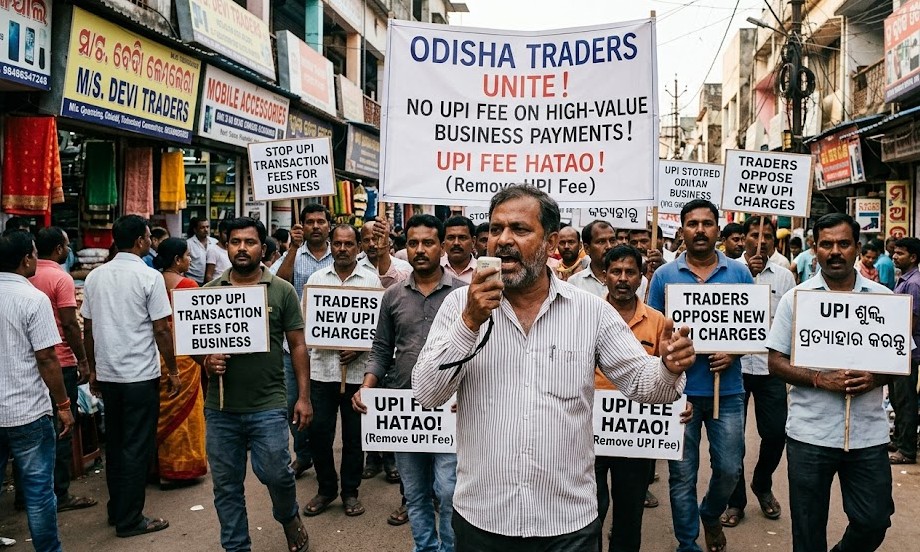
Representational Image
The Union Finance Ministry has clarified that from October 15, a 0.4% charge will apply only to commercial UPI person-to-merchant (P2M) transactions above Rs 2,000, and the fee will be paid by merchants rather than customers. The ministry also said that nearly 96% of P2M transactions will remain unaffected.
Despite the clarification, traders across sectors—including fuel retail, jewellery and wholesale businesses—say the additional expense could squeeze already thin margins.
Traders cite rising business costs
Business owners argue that they are already dealing with GST, taxes and other operational expenses, and the proposed UPI fee would add another financial burden.
Many believe that if businesses absorb the extra cost, profitability will decline, while passing it on through higher prices could ultimately affect consumers.
Petrol pump dealers seek exemption
The proposal has drawn strong opposition from petrol pump owners, who say fuel retail operates on limited dealer margins. Under the new system, a Rs 5 fee is expected to apply to eligible UPI transactions above Rs 2,000 at fuel outlets.
Dealer associations have urged the government either to exempt fuel purchases from the charge or direct oil marketing companies to increase dealer margins to offset the additional cost.
Gold traders fear further slowdown
Jewellery traders have also expressed concern, saying gold sales have already weakened in recent months. They warn that the new merchant fee could increase transaction costs for businesses handling high-value purchases.
Consumers worry about indirect impact
Although customers will not be charged directly, many consumers fear that businesses may eventually recover the additional expense by increasing the prices of goods and services. Some have also raised concerns that the change could encourage a shift back toward cash transactions, reversing some of the gains made through digital payments.
Government defends the move
The Finance Ministry maintains that the measure targets only high-value commercial transactions and will not affect the vast majority of UPI payments. According to the government, the change is designed to strengthen the digital payments ecosystem while keeping routine consumer transactions free.
Even so, trade bodies continue to press for a review of the proposal, arguing that the added cost could place an unnecessary burden on businesses already operating under tight margins.
Leave a Reply