Hyderabad, March 14: The 25th edition of the annual R&D Showcase of the International Institute of Information Technology Hyderabad began on Saturday at the institute’s Gachibowli campus. The two-day flagship event, which concludes on Sunday, has grown into one of the most anticipated research exhibitions, bringing together researchers, industry leaders, policymakers and students to explore advances in artificial intelligence, cybersecurity, algorithms, robotics and digital public infrastructure.
The R&D Showcase is the institute’s major annual exhibition where faculty and students present their latest research projects, prototypes and innovations to academia, industry and the public.
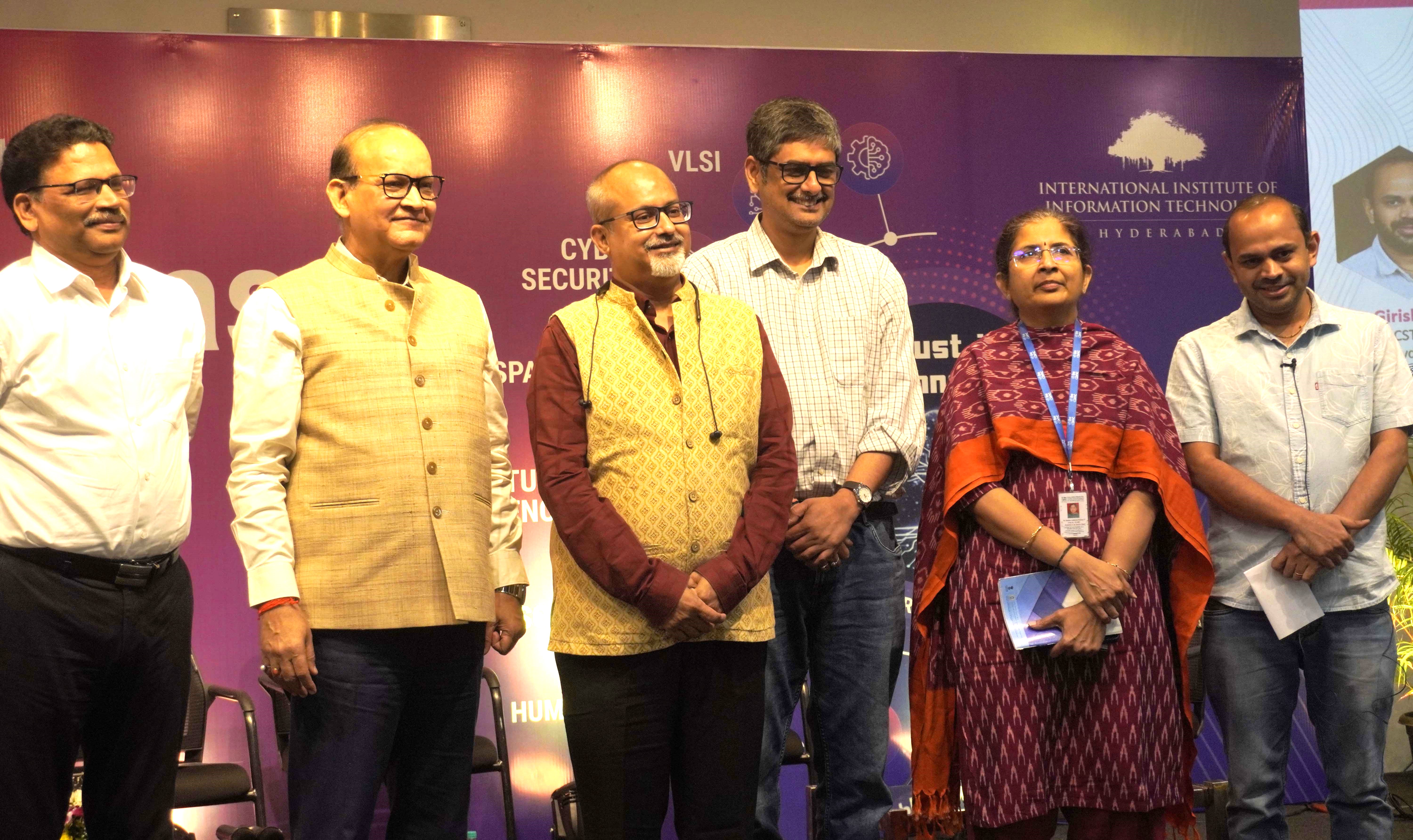
Themed “Trust in Technology – Security, Privacy and Transparency,” the event features over 400 research posters, demos and prototypes from 29 research centres, enabling visitors to interact directly with researchers and witness how fundamental research is translated into real-world applications.
The programme included spotlight sessions by the Centre for Security, Theory and Algorithmic Research (CSTAR) and the Cyber Manthan Centre (CMC), an inaugural keynote by Shivkumar Kalyanaraman, CEO of the Anusandhan National Research Foundation (ANRF), and a panel discussion on “Building Trust in the Indian Cyberspace: Privacy, Security and Transparency in the Era of Emerging Technologies.”
Delivering the keynote address, Dr Kalyanaraman said the ANRF serves as India’s primary organisation for funding and supporting research, similar to the National Science Foundation in the United States. Established under the Anusandhan National Research Foundation Act, 2023, it replaces the earlier Science and Engineering Research Board (SERB).
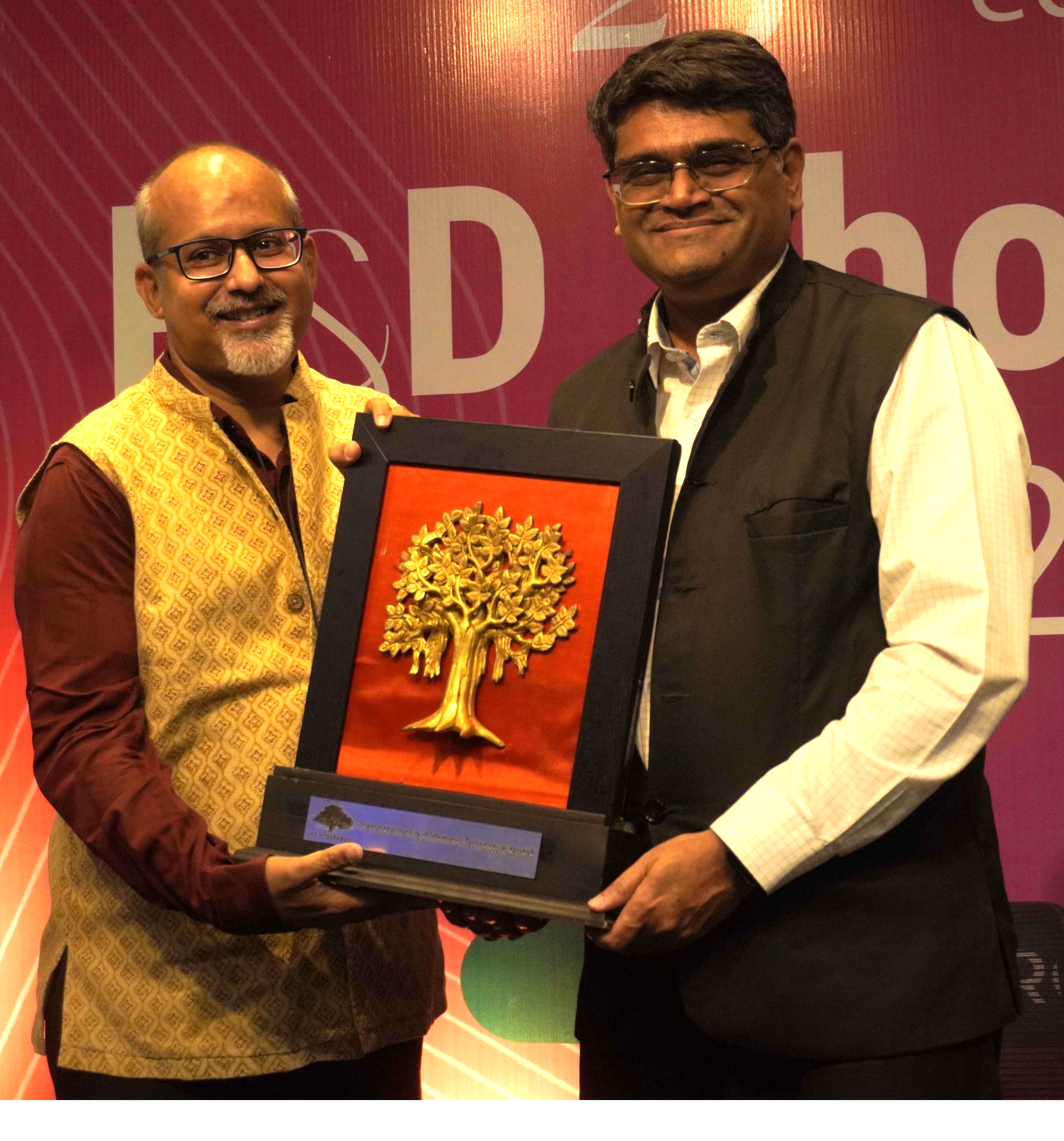
He highlighted several funding opportunities for universities and colleges, noting that ANRF aims to strengthen India’s research ecosystem by supporting scientific and technological research across institutions. The foundation promotes collaboration between academia, industry and government, strengthens research culture in universities—particularly state universities—and supports high-impact research in fields such as artificial intelligence, space, healthcare, climate science and engineering.
Dr Kalyanaraman also shared plans for several upcoming mission-mode programmes under the MAHA (Mission for Advancement in High-Impact Areas) framework, including MAHA Drones, MAHA G, MAHA Water, and MAHA Leapfrog Demonstrators for Social Innovation. These initiatives aim to address national challenges through collaborative research involving universities, industry and government laboratories, focusing on areas such as drone technologies, next-generation communication systems including 6G, sustainable water management and socially impactful innovations in healthcare, energy and education.
Prof. Sandeep K. Shukla, Director of IIIT Hyderabad, said: “The R&D Showcase reflects the spirit of inquiry and innovation that drives IIIT Hyderabad. It is encouraging to see our researchers engaging with industry, policymakers and the wider public to translate research into meaningful societal impact.”
Emphasising the theme of the event, he added: “Technology shouldn’t control us; instead, we should control technology.”
A panel discussion on “Building Trust in the Indian Cyberspace: Privacy, Security and Transparency in the Era of Emerging Technologies” was moderated by Girish Varma of IIIT Hyderabad.
The panellists included: P. R. Lakshmi Eswari, Centre Head, Centre for Development of Advanced Computing (C-DAC), Hyderabad; Krishna Sastry Pendyala, Partner – Cybersecurity, Ernst & Young; Deepak Kumar, Director, Institute for Development and Research in Banking Technology; M. V. Panduranga Rao, Centre for Cryptography and Cybersecurity, Indian Institute of Technology Hyderabad
The discussion highlighted critical concerns around cybersecurity and digital trust. Dr Lakshmi Eswari noted that security is often treated as a secondary priority during product design, rather than being integrated from the outset. Prof. Panduranga Rao pointed to a significant shortage of skilled cybersecurity professionals and emphasised the gap between academic curricula and industry requirements.
Krishna Sastry Pendyala highlighted the scale of cybercrime in India, noting that financial losses from cyber threats run into tens of thousands of crores annually and that major breaches—such as the theft of hundreds of millions of medical records—raise serious concerns about data security and digital trust. The panel stressed the need for greater awareness, stronger cybersecurity frameworks, skilled manpower and a comprehensive national cybersecurity strategy.
Alongside exhibits in AI, robotics, data science and cybersecurity, the showcase hosted industry–research confluence sessions on themes such as Cybersecurity and Privacy in the AI Era and AI for Theory and Theory for AI, a startup showcase and an industry roundtable on Agentic AI.
One of the highlights of the exhibition is an autonomous self-driving wheelchair, designed to enhance mobility for persons with disabilities. Equipped with 3D LiDAR for environmental perception and powered by Jetson Orin running ROS2, the wheelchair enables intelligent navigation with minimal user input. Advanced path planning and obstacle-avoidance systems allow safe and efficient movement in diverse environments.
Visitors also saw innovative robotics projects such as flapping-wing robots and spin drones, alongside architectural models demonstrating traditional earthquake-resilient housing systems such as Kath Kuni houses of Himachal Pradesh, Adobe houses of Rajasthan, and Ikra houses of Assam.
These models illustrate how traditional Indian architecture used local materials and ingenious construction techniques to build earthquake-resilient homes long before modern engineering technologies existed. Kath Kuni houses, for example, use alternating layers of wood and stone that absorb seismic shocks; Adobe structures rely on thick mud-brick walls that distribute stress; and Ikra houses use flexible bamboo frameworks that sway during earthquakes rather than collapse.
Sunday’s programme will feature Excitement of Research (ExOR), introducing visiting undergraduate students to research pathways, and a Faculty Futures Roundtable on research funding. The event will conclude with a patent felicitation ceremony at Research Street, recognising IIIT Hyderabad researchers for their innovation and intellectual property contributions. The institute has received over 70 patents.
Now in its 25th year, the R&D Showcase has evolved into one of the institute’s flagship platforms for presenting cutting-edge research and fostering collaboration between academia, industry and government
300 plus industries and students of several colleges are expected to visit and interact with students behind those research projects.

Leave a Reply