
Bhubaneswar, June 17 (UDN): The discovery of 1,678 errors in newly introduced school textbooks for Classes I to VIII has sparked widespread concern over the quality and accuracy of educational content in Odisha. The errors, identified by the School and Mass Education Department following complaints from teachers, parents, and educationists, have brought the textbook preparation and review process under intense scrutiny.
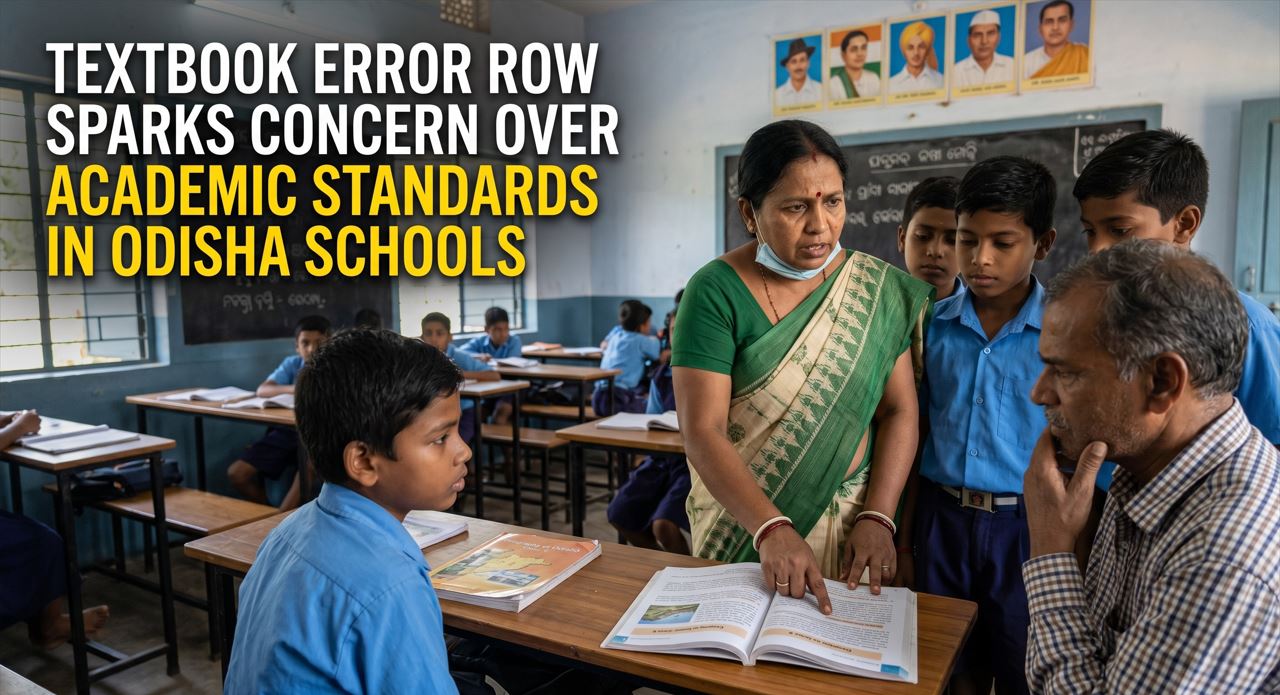
Representational image
The mistakes range from spelling and grammatical errors to factual inaccuracies, incorrect photographs, and misleading information. According to official figures, Class VIII textbooks recorded the highest number of errors, with 705 corrections required. Several textbooks across subjects such as Jijnasa, Sanskrit, Literature, Social Science, English, and Mathematics were also found to contain significant discrepancies.
Some of the errors have drawn particular attention for their seriousness. A photograph of the Karnataka Legislative Assembly was mistakenly used in place of the Odisha Legislative Assembly, while Odisha’s Niyamgiri Hills were incorrectly shown as being located in Jharkhand. In another instance, Ganjam was erroneously referred to as “Brahmapur district.” Such inaccuracies have raised concerns about the reliability of information being provided to students.
The textbooks were developed under the Odisha Curriculum Framework for School Education-2025 in alignment with the National Education Policy (NEP) 2020. The exercise involved the Directorate of Teacher Education, the State Council of Educational Research and Training (SCERT), subject experts, and experienced educators.
The revelations have prompted criticism from academic circles, with educationists and teacher associations questioning how such a large number of mistakes escaped multiple levels of review and verification. Experts have cautioned that errors related to geography, history, governance, and science can adversely affect students’ understanding of core concepts and undermine confidence in the education system.
In response, the department has initiated corrective measures and prepared a comprehensive list of revisions for incorporation in future editions. The episode has also intensified calls for stronger editorial oversight, robust fact-checking mechanisms, and greater accountability in the development of school textbooks.
The controversy has emerged as a significant challenge for the state’s education sector, underscoring the need to ensure that learning materials meet the highest standards of accuracy, credibility, and academic excellence.
Leave a Reply