
Bhubaneswar, Sept. 23 (UDN): The Odisha Forest Department has decided to remove the non-functional radio collar fitted on tigress Jamuna, a big cat translocated from Maharashtra to Odisha as part of the state’s tiger population supplementation programme.
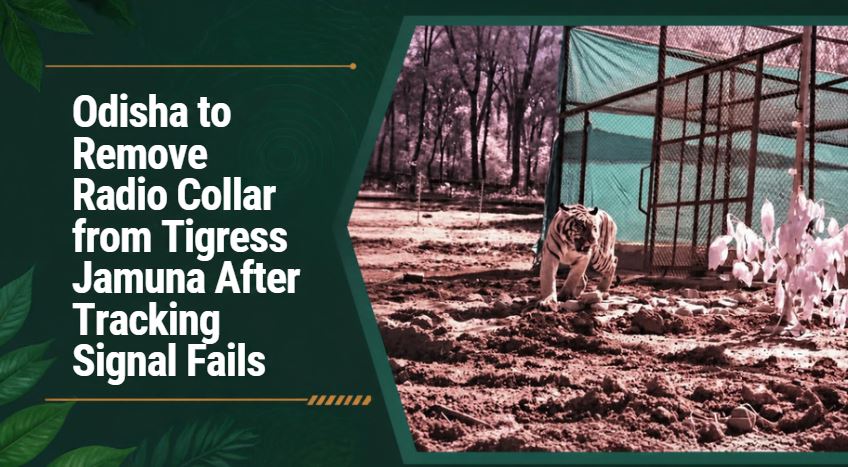
Representational Imgage
The decision was taken after the collar’s battery reportedly stopped transmitting signals, ending the department’s ability to track Jamuna through the device.
Officials of the Similipal Tiger Reserve (STR) have directed the Balasore Wildlife Division to begin preparations for removing the collar. According to officials, the device is equipped with a mechanism that can be unlocked remotely, meaning Jamuna may not need to be tranquilised for its removal.
Jamuna Being Tracked Through Field Signs
Jamuna has been staying in the Kuldiha landscape since December 2024 after moving out of the core area of Similipal.
She was earlier monitored using the radio collar and VHF-based tracking system. However, the collar has reportedly remained inactive for nearly two months.
Despite the loss of the tracking signal, forest personnel continue to monitor the tigress through indirect evidence, including pugmarks, prey kills and other signs of movement.
Officials have also reported a camera-trap record of Jamuna from around one-and-a-half months ago, while her most recent indirect signs were reportedly detected about a week ago.
Forest authorities have said the inactive collar does not pose an immediate danger to the tigress, even if its removal is delayed.
Translocated from Maharashtra in 2024
Jamuna was brought to Odisha from the Tadoba-Andhari landscape in Maharashtra on October 28, 2024, under a programme aimed at strengthening the tiger population in Similipal and improving genetic diversity.
She was subsequently released into the Similipal core area on November 9, 2024.
The tigress later moved towards the Kuldiha landscape, where she established a territory and has remained under observation.
Monitoring to Continue After Collar Removal
The Forest Department had continued monitoring Jamuna because she had not reproduced since her translocation. With the radio collar no longer operational, officials will rely increasingly on camera traps and field-based tracking to keep tabs on her movements.
The department is now making arrangements for the safe removal of the collar while continuing surveillance of Jamuna in the Kuldiha landscape.
The development comes amid increased attention on Odisha’s tiger conservation efforts, particularly the movement, survival and breeding of tigers introduced into the state as part of population augmentation initiatives.
Leave a Reply