
Researchers in the DELTAi Lab at the University of California, Irvine, working with NASA, are using Evercode Cell Fixation to preserve samples aboard the International Space Station as part of a study of cartilage tissue engineering in microgravity. The unprecedented work, part of a National Science Foundation (NSF)-funded grant led by Dr. Wendy Brown and Dr. Kyriacos Athanasiou, announced today by Parse Biosciences, aims to advance treatments for the hundreds of millions of people worldwide affected by cartilage injury.
This press release features multimedia. View the full release here: https://www.businesswire.com/news/home/20260629548658/en/
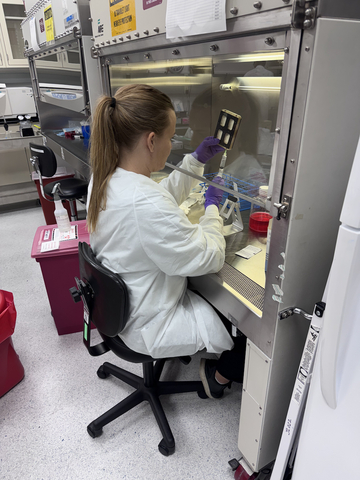
Rachel Nordberg, PhD, from the DELTAi Lab at UC Irvine, prepping the BioServe device before it goes into orbit.
Cartilage injuries cause significant pain and disability, and the need for implants that can repair or regenerate damaged tissue without harming a donor site has gone unmet for decades. Part of the difficulty is gravity itself, which may work against the formation of cartilage tissue in the lab. Microgravity may help get around that problem, and a growing line of research suggests that tissues engineered in orbit can come closer to the real thing than tissues engineered on the ground.
The researchers at UC Irvine first rejuvenate highly expanded chondrocytes to restore chondrogenic gene expression and the cells’ ability to produce cartilage. The cells are then allowed to self-assemble into neocartilage without a scaffold, and the tissue is matured under mechanical tension to build up its strength. All of this takes place in orbit in flight-certified hardware developed by BioServe Space Technologies at the University of Colorado Boulder, with samples taken for study at timepoints from the first hours of differentiation to nearly 30 days of neocartilage culture. The samples are preserved with Parse Biosciences’ Evercode Cell Fixation and returned to Earth for single cell RNA sequencing.
According to Dr. Rachel Nordberg, who is leading the study to examine the rejuvenation of these cells, “The ability to study rejuvenation of our minipig cells in microgravity at the single cell level requires us to be able to effectively preserve the cells with a long storage timeframe. We also need a species-agnostic platform that has full functionality with our specialized animal model (the Yucatan minipig).” Dr. Wendy Brown added, “Parse offers the perfect solution to give us the flexibility we need to study minipig cells, collect samples at multiple timepoints, and handle the unpredictability of spaceflight operations.”
“What the UC Irvine team is doing is remarkable. Engineering cartilage in microgravity could fundamentally change how we think about tissue repair, and the fact that they are running this level of single cell work from samples preserved in orbit is a real testament to the rigor of their science. We are honored that Evercode is a small part of it,” said Charlie Roco, PhD, Co-founder and Chief Technology Officer at Parse Biosciences.
About Parse Biosciences
Parse Biosciences, a QIAGEN company, is a global life sciences company whose mission is to accelerate progress in human health and scientific research. Empowering researchers to perform single cell sequencing with unprecedented scale and ease, its pioneering approach has enabled groundbreaking discoveries in cancer treatment, tissue repair, stem cell therapy, kidney and liver disease, brain development, and the immune system.
View source version on businesswire.com: https://www.businesswire.com/news/home/20260629548658/en/
