
Bhubaneswar, Oct. 6 (UDN): As Odisha prepares to bring back student union elections after an eight-year gap, the state government has introduced a stringent code of conduct aimed at keeping campus campaigning transparent, disciplined and free from digital misinformation.
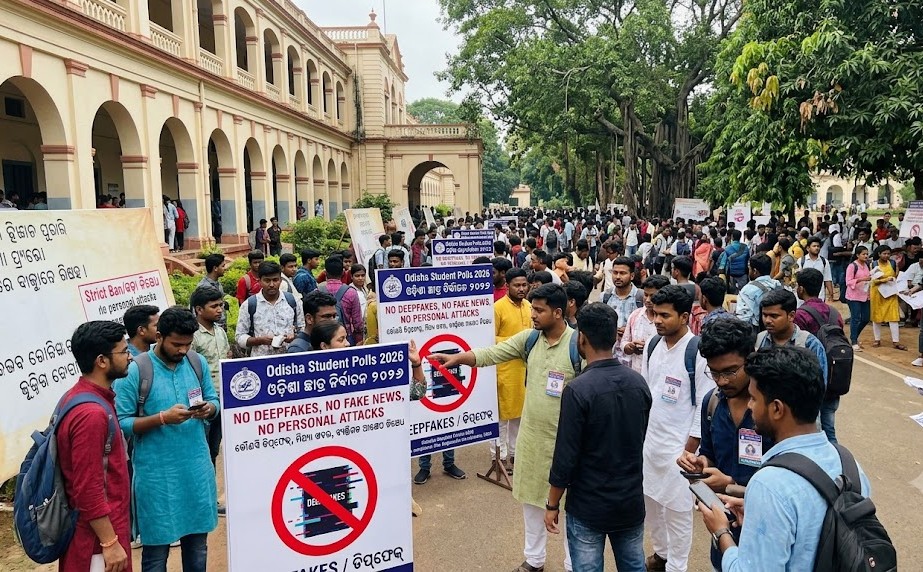
Representational Image
The Odisha Higher Education Department has scheduled student union elections across eligible colleges and universities for October 15, 2026. With social media now playing a major role in political and public campaigning, the latest guidelines place particular emphasis on regulating candidates’ online activities.
AI-generated content under the scanner
One of the most significant provisions is the restriction on the use of artificial intelligence to manipulate election-related content.
Candidates and their supporters will not be permitted to create or circulate fake videos, deepfakes, manipulated photographs or other AI-generated material designed to misrepresent or target rival candidates.
The move comes amid growing concerns over the rapid spread of synthetic media and the difficulty of distinguishing genuine content from digitally manipulated material.
No abusive campaigns or personal attacks
The election guidelines also require candidates to maintain decorum during online campaigning.
Abusive language, personal attacks, defamatory statements, unsubstantiated allegations and misleading claims will not be permitted.
Authorities have also warned against using social media platforms to spread false information with the intention of influencing students or damaging the reputation of opponents.
The emphasis is on ensuring that online campaigning remains focused on issues, student concerns and constructive debate rather than personal attacks.
Traditional campaign methods face restrictions
The restrictions extend beyond social media.
Under the election framework based on the Lyngdoh Committee recommendations, candidates will face restrictions on conventional publicity methods, including printed posters, pamphlets, loudspeakers and vehicle rallies on campus.
Where permitted, candidates may use handmade posters in designated areas, subject to institutional rules.
The objective is to prevent excessive campaign activity, damage to campus property and disruption of academic environments.
₹5,000 campaign spending ceiling
Candidates will also have to operate within a prescribed campaign expenditure limit.
The spending ceiling has been fixed at ₹5,000 per candidate, with candidates required to maintain and submit expenditure records as prescribed by the election authorities.
Post-election scrutiny of campaign expenses is intended to improve financial transparency and prevent excessive spending from influencing campus contests.
Political interference kept out
The guidelines also seek to preserve the independent character of student elections by discouraging direct political party involvement, funding and formal political affiliations.
The broader objective is to ensure that student representatives are elected on the basis of campus issues and student interests rather than external political influence.
Attendance and age rules
Eligibility requirements have also been specified for contestants.
As per the stated guidelines, candidates must be regular students and meet prescribed age and academic requirements. The framework includes a minimum 75% attendance requirement, while the age limits generally provide for candidates aged 17–22 years for undergraduate courses and up to 25 years for postgraduate courses, subject to applicable rules.
Candidates with criminal records are also barred from contesting under the prescribed eligibility conditions.
Eight years after the last campus polls
The October 15 election will mark the return of student union elections in Odisha after an eight-year hiatus.
With campuses preparing for the electoral process, the authorities face the challenge of balancing students’ right to campaign and participate in democratic activities with the need to prevent violence, misinformation, excessive spending and disruption of academic life.
The new digital provisions reflect a significant change from earlier campus elections: the election battlefield is no longer limited to the college campus—it also extends to smartphones and social media platforms.
For candidates and their supporters, the message is clear: campaign actively, but stay within the rules. In the 2026 student polls, a viral post could attract as much scrutiny as a physical campaign violation.
Leave a Reply