
New Delhi, Oct 9 (UDN): Odisha has called for a more business-friendly Goods and Services Tax (GST) framework, with a focus on faster refunds, simplified registration procedures and fewer compliance-related discrepancies to ease the burden on micro, small and medium enterprises (MSMEs).
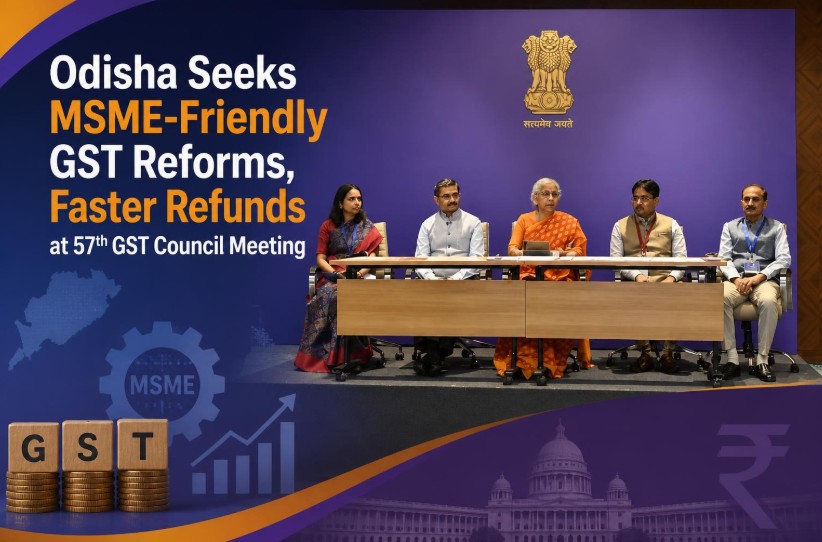
The issues were discussed at the 57th meeting of the GST Council, chaired by Union Finance Minister Nirmala Sitharaman in New Delhi on October 8, 2026. Representing Odisha Chief Minister Mohan Charan Majhi, state Cabinet Minister Prithviraj Harichandan, who holds the Law, Works and Excise portfolios, presented the state’s priorities on improving tax administration and reducing procedural hurdles for businesses.
Chief Ministers, state finance ministers, nominated ministers from states and Union Territories, and senior government officials participated in the meeting.
Faster Refunds to Improve Business Cash Flow
One of the key areas of discussion was the proposed system-based processing and sanction of GST refunds to ensure quicker disbursal, greater transparency and better tracking for eligible taxpayers.
The Council also considered proposals concerning refunds of input tax credit (ITC) on capital goods used for zero-rated supplies, along with ITC on input services and capital goods under the inverted duty structure.
These measures, if implemented, could help exporters and manufacturers unlock working capital currently tied up in tax credits, improving liquidity and supporting business expansion.
Simpler GST Registration for Small Businesses
Simplifying GST registration emerged as another priority, particularly for small enterprises and taxpayers operating in rural and semi-urban areas.
The discussions focused on clearer guidelines and practical tools to make registration more accessible and reduce procedural difficulties for businesses entering the formal tax system.
For MSMEs, which often operate with limited administrative resources, a more straightforward registration process could reduce compliance costs and allow entrepreneurs to devote greater attention to production, employment and growth.
Measures to Reduce Return Filing Discrepancies
The Council also considered recommendations from the Working Group on GST Returns and Processes, in which Odisha’s State GST team participated.
The proposals cover improvements in return filing and alternative mechanisms for correcting tax liabilities and input tax credit claims. The objective is to minimise mismatches that can trigger notices and create additional compliance work for genuine taxpayers.
Odisha officials also contributed to discussions on process-oriented refund reforms through the GST Law Committee.
A more predictable correction mechanism could help businesses resolve discrepancies efficiently while enabling tax authorities to focus on cases requiring closer scrutiny.
Enforcement Provisions Under Review
Another proposal discussed at the meeting concerned removing arrest provisions for certain economic offences where existing GST law may provide adequate mechanisms for addressing violations.
The proposal seeks to establish a clearer balance between effective tax enforcement and greater confidence among compliant businesses. Any changes would depend on the Council’s decisions and the applicable legal process.
Reforms Geared Towards Ease of Doing Business
The discussions form part of broader efforts to improve tax administration, support economic activity and advance the national vision of Viksit Bharat by 2047.
For MSMEs and small businesses in Odisha, faster refunds, easier registration and fewer procedural disputes could help reduce paperwork, improve cash flow and create a more predictable business environment.
The proposals discussed at the meeting signal a continued focus on making GST compliance more transparent, accessible and responsive to the needs of businesses. Their eventual impact will depend on the formal decisions taken by the GST Council and the implementation of the approved measures.
Leave a Reply