
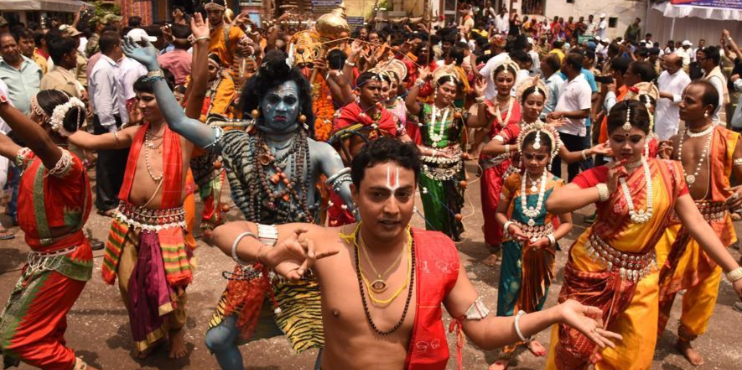
When the majestic chariots of Lord Jagannath, Lord Balabhadra, and Goddess Subhadra begin their grand journey along the Bada Danda (Grand Road) of Puri, the atmosphere transforms into a celebration of faith, devotion, and culture. The sound of chants, the fragrance of incense, and the energy of millions of devotees create a divine spectacle — but there is another powerful element that gives the festival its unique rhythm: dance.
The Rath Yatra is not just a religious procession; it is a living expression of Odisha’s spiritual and artistic heritage. As the deities come out of the temple to meet devotees, dancers become a bridge between the human world and the divine. Through graceful movements, expressive storytelling, and energetic performances, Odisha’s traditional dance forms add a deeper cultural meaning to this centuries-old festival.
Mahari: The Ancient Temple Tradition
The roots of Odisha’s sacred dance traditions can be traced back to the Mahari tradition, where women dancers dedicated their lives to serving Lord Jagannath through music and dance inside the temple.
Maharis performed devotional dances as part of temple rituals, presenting songs and movements inspired by the divine love of Lord Krishna. Their performances were not merely artistic expressions but acts of worship offered to the deity.
During Rath Yatra, the Maharis traditionally played an important role by performing during the ceremonial movement of the deities from the temple to the chariots. Their graceful and spiritual style reflected a deep connection between devotion and artistic expression.
Although the traditional Mahari system has declined over time, its influence continues to inspire artists who work to preserve and present this unique heritage.
Gotipua: Where Devotion Meets Acrobatics
Over the centuries, the Gotipua tradition emerged as another significant form of devotional dance in Odisha. Performed by young boys dressed in traditional feminine attire, Gotipua developed as a way of expressing devotion through stories of Lord Krishna and the Bhakti movement.
Known for its strength, flexibility, and dramatic movements, Gotipua performances include impressive acrobatic formations and challenging body postures. During Rath Yatra celebrations, these energetic performances capture the attention of devotees as dancers showcase their skill and dedication on the streets of Puri.
Beyond its visual appeal, Gotipua represents years of discipline, training, and devotion passed down through generations.
Odissi: Odisha’s Classical Identity
Odissi, one of India’s renowned classical dance forms, carries the artistic influences of both Mahari and Gotipua traditions. During Rath Yatra, Odissi takes on a special significance as dancers perform close to the roots of this ancient art form — among the people, on the historic streets of Puri.
With its signature Tribhanga posture, expressive gestures, and storytelling through facial expressions, Odissi brings stories of devotion and mythology to life. For many dancers, performing on the Bada Danda during Rath Yatra is not just an artistic opportunity but a spiritual experience.
Every movement, gesture, and rhythm becomes an offering to Lord Jagannath.
A Festival Where Art and Faith Unite
The presence of Mahari, Gotipua, and Odissi traditions during Rath Yatra reflects Odisha’s unique ability to preserve its cultural identity through living traditions. These dance forms are not confined to museums or stages; they continue to breathe through festivals, communities, and generations of artists.
As thousands of devotees pull the massive chariot ropes and the streets echo with music and devotion, these sacred dances remind us that faith is not only experienced through prayers — it is also expressed through movement, creativity, and the timeless language of art.
Rath Yatra remains a celebration where spirituality and culture move together, carrying Odisha’s rich heritage forward with every step and every rhythm.
Leave a Reply